A city guide should improve decisions, not promise a fixed itinerary. The sections below focus on durable ways to connect displays and place. Confirm every changing practical detail with the institution.
Start with institutional purpose
The Egyptian Museum in Tahrir, the National Museum of Egyptian Civilization, the Coptic Museum and the Museum of Islamic Art do not tell the same kind of story. One may foreground an archaeological collection, another a long civilization narrative, and others a material, religious or historical field. Read each museum’s own introduction before comparing objects. A difference in display is often a difference in mission, not an error to be corrected.
Give one museum enough time
Cairo traffic, security procedures, heat and visual fatigue make an overfilled itinerary fragile. Build a day around one primary museum and treat a second as optional. Inside, choose two or three galleries instead of racing the whole building. Current admission, opening and photography information can change, so confirm it on the institution’s official page close to the visit.
Use Tahrir to study collecting history
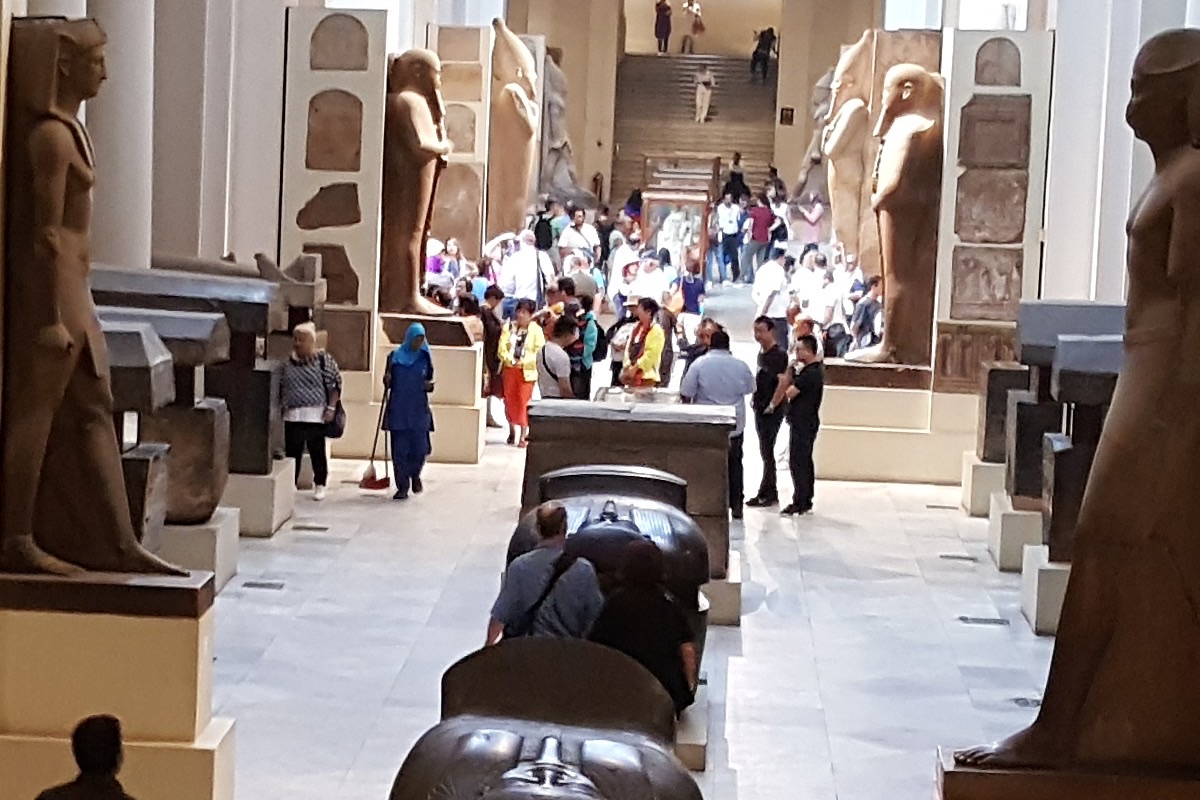
The Egyptian Museum’s dense historic building can make the development of archaeology and museum display unusually visible. Notice older case types, object numbering, groupings and the relationship between architecture and collection scale. Do not treat density as absence of interpretation. Ask how the building itself records an earlier model of the encyclopaedic archaeological museum and how current displays work within it.
Use NMEC to test long chronology
A museum organized around Egyptian civilization across long periods asks visitors to follow continuities and transformations beyond dynastic boundaries. Select one material or activity—textiles, writing, craft, food or belief—and trace where it changes. Long chronology can reveal connections, but it can also compress regional and social difference. Note where the displays slow down and where centuries pass quickly.
Read specialised museums at object scale
At the Coptic Museum and Museum of Islamic Art, architecture, script, woodwork, textiles, ceramics, metal and glass can be compared with greater concentration. Avoid treating either collection as a narrow appendix to an “ancient Egypt” trip. They document complex communities, institutions and artistic networks. Use the inscription and material lenses, while keeping religious objects connected to practice rather than style alone.
Keep urban context respectful
Historic Cairo and Coptic Cairo include active places of worship and residential life, not outdoor extensions of museum galleries. Dress and behave according to local requirements, accept access restrictions and do not photograph people without consent. Museum interpretation can prepare you to notice architecture, but public streets and sacred spaces have their own priorities.
Make a comparison table after each visit
Use four rows: organizing principle, strongest evidence, missing context and one display choice. Complete the table from your notes before reading reviews. Then compare museums without ranking them as simply modern or old-fashioned. The most useful question is which relationships each institution makes visible, and what another museum helps you see differently.
Plan from official pages
Institutional websites and Ministry of Tourism and Antiquities museum pages are the correct sources for current hours, ticket categories, closures and rules. Search results, travel blogs and map listings can lag behind operational changes. Cabinet Walk Egypt does not sell admission and does not maintain live schedules. Keep a screenshot or note of the official information you relied on, including its date.
Official sources reviewed 29 July 2026: Egyptian Museum ↗ · NMEC ↗ · Coptic Museum ↗ · Museum of Islamic Art ↗. Current arrangements may change.