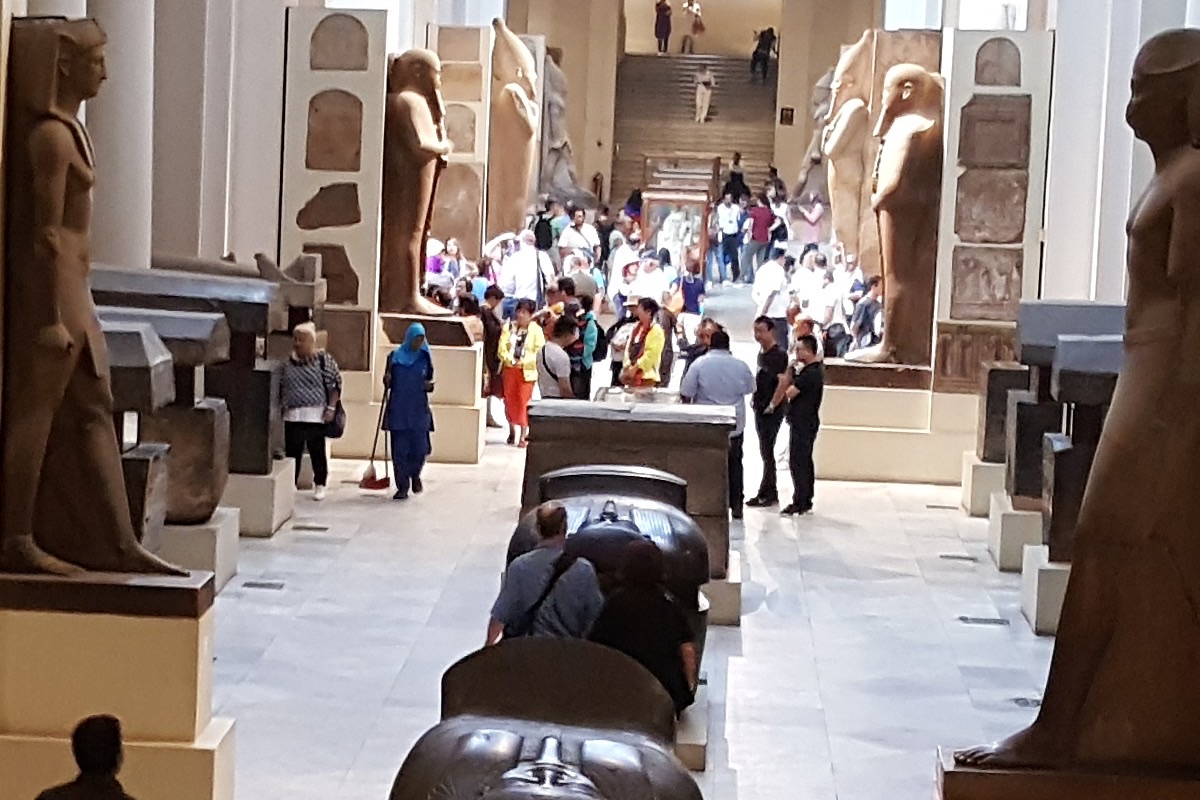
A museum room is not a storage list. Doors, cases, sight lines and pauses place one object before another. That sequence may be chronological, thematic, geographic or designed around a visual climax. Once you identify the organizing rule, you can understand what the display explains clearly—and what becomes harder to see.
Find the invitation
Pause at the threshold. Which object is visible first, which heading is largest and where does the path seem to turn? Introductory panels often declare a period or theme, but architecture may produce a different emphasis. Record the first three things that attract you before reading deeply. That quick list reveals how colour, scale, lighting and position direct attention.
Name the organizing rule
Look for dates, dynasties, sites, materials or functions repeated across labels. A chronological gallery asks you to notice change over time. A site-based room can preserve archaeological relationships. A thematic display connects distant periods but may weaken local context. No single rule is complete. Naming it helps you work with the display instead of treating its order as natural or inevitable.
Watch for the hinge object
Many rooms contain an object that turns the story: a new script appears, a technology changes, a ruler reunifies territory or a foreign form is adapted. The hinge may occupy a central case or simply sit between two label groups. Compare the objects immediately before and after it. Which features continue, and which does the display present as new?
Read gaps as carefully as transitions
A jump of several centuries, an absent region or a case dominated by elite material can result from survival, excavation history, collecting priorities or available space. Do not automatically call every gap a curatorial failure. Ask what kind of evidence would be needed to fill it and whether fragile, ordinary or undocumented objects are less likely to reach a display.
Reverse the route
After reaching the end, turn around and scan the room backward. The final object now becomes an introduction, and visual relationships change. This simple exercise exposes how strongly direction affects interpretation. It is especially useful in galleries where visitors enter from more than one door and the intended route is unclear.
Compare labels at two levels
Section panels usually make broad historical claims; object labels provide narrower evidence. Select one sentence from the panel and test it against three objects. Do they demonstrate the claim through material, image, date or provenance? If not, the statement may depend on evidence elsewhere. The exercise separates a persuasive room narrative from the individual records supporting it.
Notice modern chronology
The date of excavation, acquisition, restoration or redisplay may appear separately from the ancient date. These modern events create another sequence. An object found in the nineteenth century and conserved in the twenty-first carries institutional history alongside its original use. Add those dates to your route notes when available; they explain why collections and interpretations change.
Map the room in six boxes
Draw six boxes for the main stops and connect them with arrows. Give each box one verb—introduces, compares, interrupts, expands, questions or concludes. The result need not match the curator’s exact plan. Its value is forcing you to describe relationships rather than accumulate isolated facts. A sequence map also makes two museums much easier to compare later.
Notice where visitors make their own sequence
Crowding, seating, barriers and popular objects can redirect a route that looks clear on paper. Observe where people pause and which cases they bypass without judging their choices. The lived route may expose a bottleneck, an unreadable label or an unusually effective sight line. Your own path is part of this evidence too, so mark where practical conditions—not chronology—determined what came next.
Test the conclusion against the entrance
At the end of the room, reread your first prediction about its argument. Identify one object that supports it and one that complicates it. If the display has no obvious conclusion, describe how it releases you into the next space. This final check turns the visit into a complete reading rather than a series of beginnings, and it records how your understanding changed through movement.
Primary sources reviewed 29 July 2026: Egyptian Museum ↗ · NMEC ↗. Displays and visitor conditions may change.