A city guide should improve decisions, not promise a fixed itinerary. The sections below focus on durable ways to connect displays and place. Confirm every changing practical detail with the institution.
Use the museum as a change of pace
Luxor’s monumental sites can produce visual overload. Luxor Museum offers a more concentrated setting in which material, provenance and individual objects can regain detail. Visit before a major site to establish names and forms, or afterward to test what the landscape changed in your understanding. In either order, avoid treating the museum as a substitute for context or the sites as museums without boundaries.
Prioritize precise provenance
When a label names Karnak, Luxor Temple, a specific cache, tomb or excavation area, mark the location. Compare it with a map only after observing the object. A regional place-name is not enough: temple zone, workshop, burial and reused architectural context produce different evidence. Record uncertainty exactly when a context is reconstructed or incomplete.
Read sculpture in relation to approach
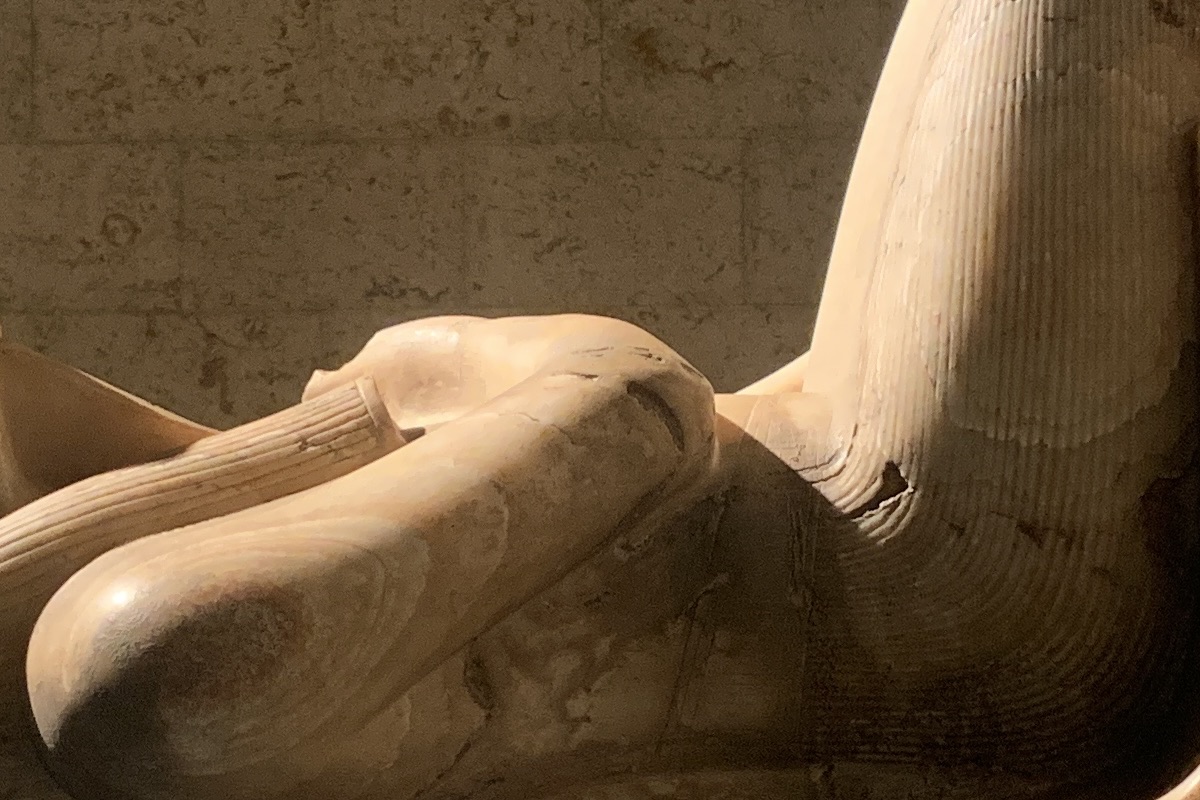
A statue’s present lighting and eye level may differ radically from an ancient court, chapel or processional route. Use the scale and placement lenses together. Look for back-pillars, finished sides, base inscriptions and the direction of gaze. Then ask who moved around whom—the viewer, the image or a ritual procession. Do not reconstruct a setting from visual drama alone; use label and site evidence.
Compare the Luxor cachette as a group
Objects discovered together can preserve a modern excavation event as well as varied ancient histories. If a gallery identifies a cache, note which features belong to the group and which belong to each statue’s earlier production and use. A shared discovery place does not mean every object had the same original purpose. Group context should generate questions rather than erase individual biographies.
Link objects to building phases
Karnak and Luxor Temple developed across long periods. Blocks, statues and inscriptions may have been moved, buried, usurped or incorporated into later construction. When the museum provides a reign or building phase, place it on a simple site timeline. This prevents “the temple” from becoming one unchanging setting and makes reuse visible as historical action.
Treat the west bank as lived and worked
Theban tombs reveal elite commemoration, but archaeological evidence also includes settlements, tools, ostraca and records of labour. Use small objects to balance monumental narratives. A written note, basket, ceramic jar or work trace can explain systems that royal imagery leaves out. Avoid photographing residents as picturesque evidence and follow all site restrictions.
Manage heat, distance and attention
Site conditions affect interpretation. Plan fewer stops, carry permitted water and use shade and rest as part of the schedule. A tired visitor records less accurately and is more likely to ignore barriers. Official pages and on-site staff should guide current access, hours and photography. Transport plans and commercial tour promises are not substitutes for institutional confirmation.
Close with a provenance triangle
Select one museum object and write three points: its ancient setting, modern discovery context and current display. Add dates and responsible institutions where known. Then draw what evidence connects the points. The triangle prevents a direct jump from pharaoh to museum case and keeps excavation, conservation and regional stewardship inside the story.
Official sources reviewed 29 July 2026: Luxor Museum ↗ · Karnak ↗ · Luxor Temple ↗. Current arrangements may change.