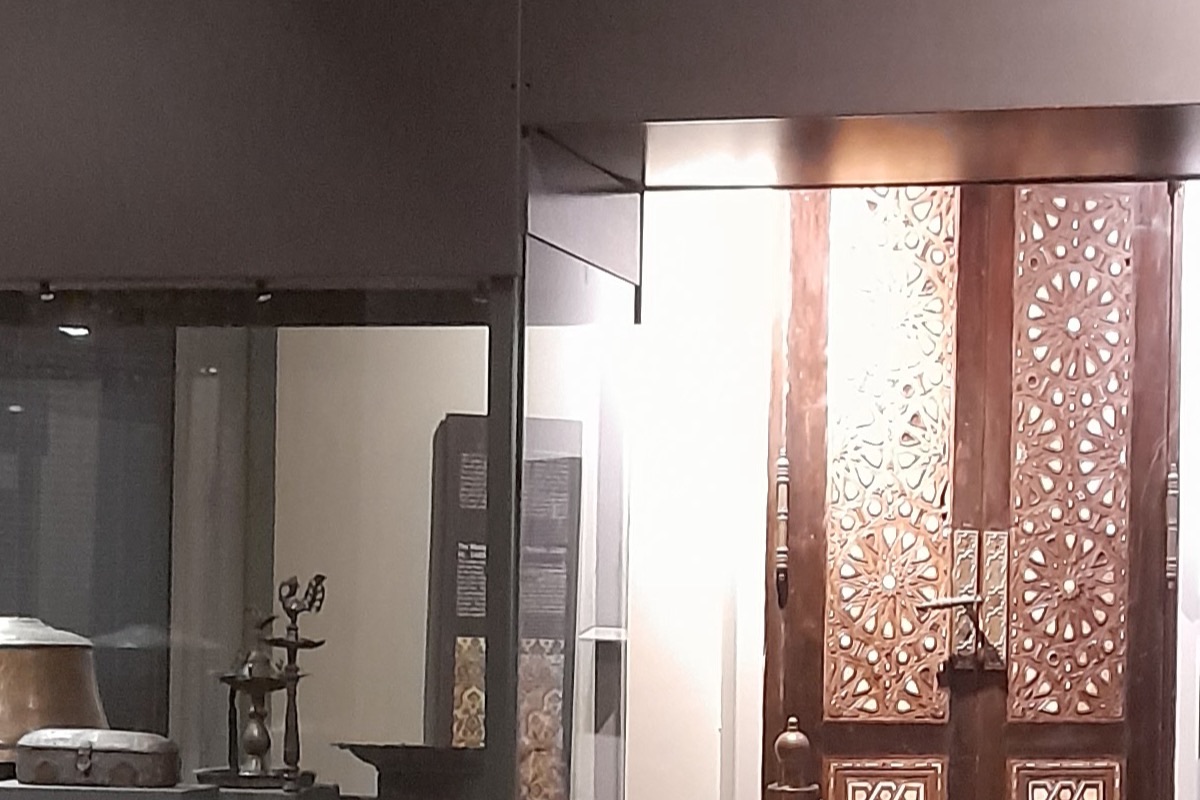
Museum stories often end with an ancient date and begin again at the gallery case. The interval matters. Objects were buried, reused, discovered, divided, registered, published, moved, conserved and reinterpreted. Following that later history explains why an object is here, why information is uneven and why displays can change without the past itself changing.
Find the discovery event
Look for an excavation site, excavator, year and context. “Discovered at” is more useful when paired with information about how and where. Chance finds, controlled excavation and market acquisition produce different records. Do not confuse the ancient date of manufacture with the modern date an object entered documented history.
Read the inventory number
Museum numbers may encode collection, year or sequence, though systems vary. Even when you cannot decode one, copy it. The identifier connects the displayed object to catalogues, conservation files and future labels more reliably than a descriptive name such as “blue bowl.” Accession numbers are infrastructure for knowledge, not visual clutter.
Ask how it entered the collection
Excavation allocation, transfer from another institution, donation, purchase and recovery are distinct routes. Laws and administrative systems changed over time, so avoid judging a nineteenth-century movement by a vague modern assumption. Seek documented provenance and acknowledge gaps. Ethical questions become clearer when the actual chain of custody is visible.
Track changes in interpretation
An object may move from an art display to a social-history case, receive a new date or be associated with a different workshop after research. Older guidebooks and archived labels can expose these shifts. Revision is not automatically evidence of incompetence; it is often how scholarship works. Note the publication or display date before comparing claims.
Notice national and regional movement
Egyptian collections have been reorganized as museums open, renovate and redefine their missions. A transfer can place objects in a stronger thematic or regional context, while visitors may still expect them at an older location. Current official collection pages are therefore more reliable for planning than undated blogs or image captions.
Include conservation and storage
Displayed objects are only a fraction of a collection. Study, treatment, loans and storage shape what becomes visible. Temporary absence does not erase an object’s institutional history. When a museum explains rotation, gallery closure or conservation, record that modern condition separately from your interpretation of the ancient work.
Treat digital images as another afterlife
Online catalogues and photographs make objects portable again. Cropping, colour balance, resolution and missing scale alter the encounter, while metadata can reconnect dispersed information. Save the stable collection record or museum page, not only an image file. Check rights before reusing it, and keep creator and licence attached.
Construct a double timeline
Draw one line for production, use, repair and deposition; draw a second for discovery, acquisition, study, conservation and display. Connect events only where evidence supports the link. This double timeline prevents the museum from appearing outside history. It also gives you a disciplined way to discuss contested or incomplete provenance without filling gaps with certainty.
Follow copies and popular images
Replicas, casts, postcards, textbooks and social media can make one view of an object more familiar than the object itself. Ask which angle, colour and reconstruction are repeatedly circulated. Popular visibility may influence display expectations and even the route visitors take through a museum. Treat reproduction as reception history while keeping the original material, scale and institutional record distinct.
End with the present tense
Finish the biography by stating what you can verify now: the institution, display or storage status if officially published, label date and your visit date. Avoid implying permanent ownership, location or interpretation when the source does not support it. The present tense is temporary, but documenting it creates a reference point for future change and reminds you that museums continue to make decisions about care, access and meaning.
Primary sources reviewed 29 July 2026: Alexandria National Museum ↗ · ICOM Code of Ethics ↗. Displays and visitor conditions may change.