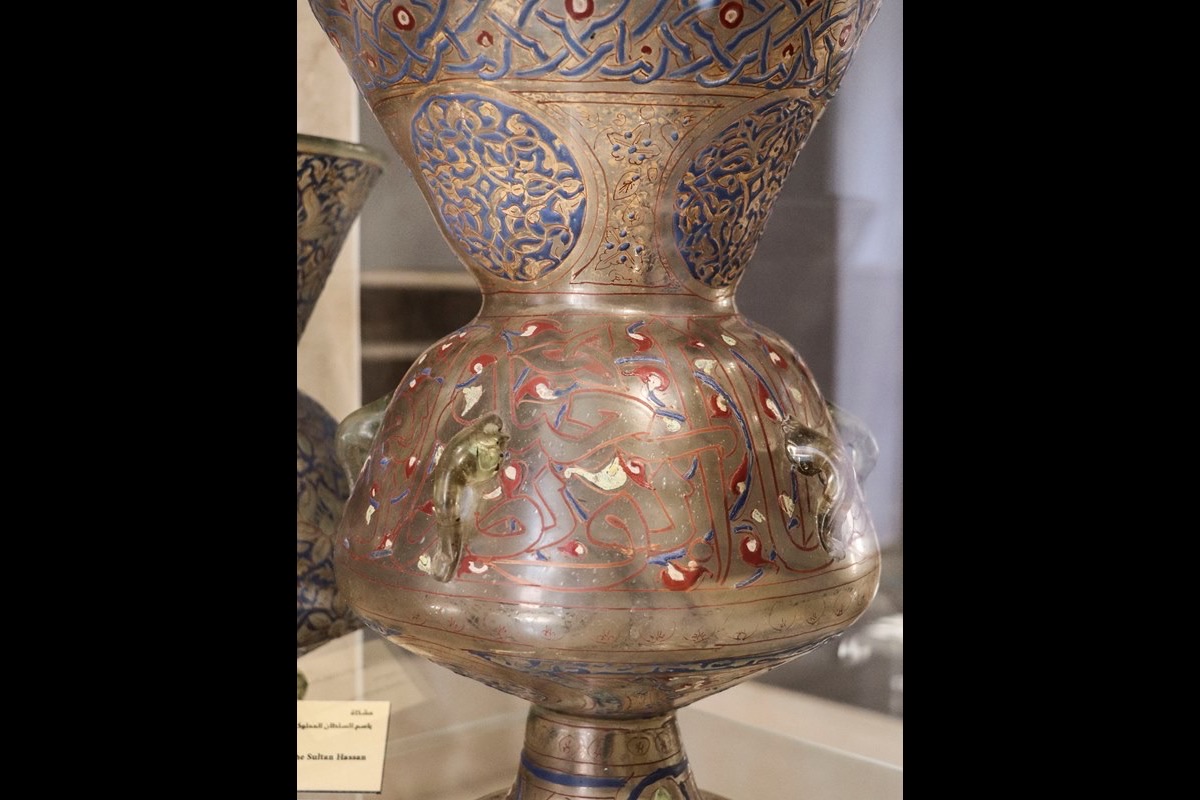
A translated label can make an inscription feel transparent. Yet writing on stone, metal, wood, pottery or glass was designed to occupy a surface and to be encountered in a particular way. Before reading the museum’s translation, locate the text on the object. Its scale, direction, visibility and relationship to images are part of the evidence.
Find the beginning and the frame
Look for columns, borders, cartouches, bands or changes in colour that organize the text. Can you tell where reading starts? Some inscriptions circle a vessel or run high above normal eye level; others hide under a base. Placement tells you whether the words addressed a public audience, a ritual setting, an owner, a divine recipient or the object itself.
Compare script with support
Incised stone, painted plaster, inked pottery and enamelled glass require different gestures. Notice line regularity, correction, crowding and the way letters respond to curves or joins. A beautiful translation can distract from this physical work. Script is both language and manufacture, and its execution may involve more than one specialist.
Separate transcription, transliteration and translation
Museum panels may show the original signs, a scholarly rendering in Latin characters and an English translation. These layers do different jobs. Translation makes content accessible but cannot preserve every pun, sound or title. If only English is shown, treat it as an interpretation rather than the inscription itself. Copy uncertain brackets and ellipses because they mark damaged or restored text.
Ask who could encounter it
Literacy was not simply present or absent. A viewer might recognize a royal name, sacred formula, emblematic sign or prestigious script without reading every word. Recitation could make written language audible. Consider distance, light and access: a long foundation text hidden inside a building worked differently from a short ownership mark on a portable object.
Let image and word negotiate
Text may identify a figure, supply speech, dedicate an offering, mark ownership or transform an image through naming. Do not assume it merely captions what is visible. Compare direction of faces, gestures and lines of writing. On Islamic objects, calligraphy may also structure the entire visual field; religious, poetic or titulary language can operate as pattern and proclamation together.
Notice later marks
Graffiti, inventory numbers, excavation marks and modern labels can share the object with ancient writing. They document later encounters even when museums visually minimize them. Distinguish deliberate ancient erasure from accidental loss and modern damage. A removed name may carry political or ritual significance, but the explanation must come from context rather than the presence of a blank alone.
Compare translations cautiously
If two museum labels or catalogues translate a phrase differently, the difference may reflect new scholarship, audience level or a genuinely ambiguous word. Record both versions and their dates. Do not resolve the issue by selecting the smoother English. Variation can reveal where interpretation remains active.
Build an inscription note
Sketch the object outline and mark exactly where text appears. Add script or language as identified by the museum, visibility, direction, translation source and any missing areas. Finish with one question the English cannot answer. This layout preserves the inscription as a spatial feature instead of reducing it to a quotation detached from its support.
Listen for formula and repetition
Repeated titles, offerings, blessings or dedicatory phrases may look redundant in translation, yet repetition can establish authority, rhythm and ritual effectiveness. Compare the same phrase across two objects and note what changes: name, material, placement, scale or audience. Do not assume formula means careless copying. A stable structure can make a specific variation more meaningful and can help scholars restore damaged passages with clearly stated uncertainty.
Keep personal names attached to roles
Names may be accompanied by titles, family relationships, places or institutional roles. Record those connections rather than extracting a name as if it were a modern signature. The inscription may present an ideal social identity, commemorate an office or invoke a relationship. Museum translations sometimes simplify long titulary sequences, so consult a full catalogue record before making claims about biography or authorship.
Primary sources reviewed 29 July 2026: Museum of Islamic Art ↗ · Coptic Museum ↗. Displays and visitor conditions may change.